Learn How to Drive: Your Car and Your Mental States

There are a lot of stereotypes out there about bad Asian drivers. For me, I’ll admit, it’s true. I’m not the best driver in the world and I blame it on the fact that I should be paying more attention than I often am while on the road. Dangerous, I know. But, I’m working on it! Last weekend, I decided to get a car wash. It was the first one for this particular vehicle which I invested in after I got rear-ended within a week of the new year starting. It’s a “smart” vehicle, meaning it has cameras and sensors all around it to literally take the wheel if I’m veering into the next lane, light up or beep if I’m getting too close to another car or pedestrian, and give me a birds-eye-view of my vehicle which eliminates any excuse I could ever have about being too small to see whether I’m double-parked. Anyhow, you should know by now that I love metaphors as a way of understanding and communicating about life. So, as my car freaked the F*#! out as it went through its very first car wash, it got me thinking about how driving a car is a lot like getting a handle on our mental states.

I wish I was cool enough to drive a stick, but besides that time my cousin let me drive his car in the neighborhood, I’ve always driven an automatic. In this blog, I’ll share my thoughts on how my car being in park, drive, auto-plot, reverse, and neutral correspond with choosing the right mental states given the current circumstance. Mastering both will not only help us better get from point A to point B but helps us to realize that being in control of our lives doesn’t always necessarily mean being the control freak that you are. Okay… that I am. 

PARK 

Especially recently, my vehicle has been in Park most of the time. Part of the reason I even got a Hybrid vehicle is because my previous lifestyle had me on the road driving to and from work or to see family and friends for about a handful of hours each day. My vehicle being in Park most of the time saves me gas, reduces the amount of time I have to spend on maintenance, and prolongs the lifespan of my car. Being in Park for way too long though may create challenges in starting the engine back up due to lack of use.  

This is the same when our minds are on chill mode. Maybe we’re watching a movie, scrolling on social media, or blacking out from having way too many cocktails at home. Having this much downtime was a dream come true when quarantine first started. Then, after a while, it got old and I started to think about better ways to spend my time. I couldn’t let life just pass me by and similar to having a vehicle with features that are meant for long, beautiful rides with its panoramic sunroof, off-roading capabilities, and bumpin’ speaker system, what good is a young, sharp mind if I don’t use it? I’m more conscious now of how much time I spend binge-watching Netflix vs. taking in life-enriching information through books, podcasts, and videos. Even if I physically can’t go to very many places, I can go on a wild journey internally and that has taken me so far in only a handful of months.

DRIVE 

Driving actually gets you places. But how often are we driving only to realize that we’ve gotten to our destination without even remembering the ride? Driving is best when it’s intentional and exploratory. You’re paying attention to the road but not hyper-vigilantly raging at someone who cut you off or is driving too slow. You’re feeling the petal underneath your foot and the steering wheel within your hands. Sometimes you know where you’re going and choose the most efficient route or if you have time, you take the scenic route. Other times, which I’ve done more so recently, you just drive and explore to see where the roads will take you.

Being in Drive mode is like when our mind is productive. Even though I’m on Zoom calls all day, I get a lot done. I set goals as my destinations and I work towards them. I’ve been working a lot, building and growing my business, and it’s been a blast being able to do so with colleagues that are as equally, sharp, driven, and fun to be around. Both in life and in my actual vehicle though, I have, at times, exhausted all my gas and before I knew it, I was on empty with no gas station around. It meant that I had to run on empty, scared that my vehicle would give out before I was able to find a way to replenish the energy I needed to complete the trip. The warning here is that productivity is important, but you will burn out if you’re not balancing going with being still.

AUTO-PILOT

Then, there’s auto-pilot. I don’t use auto-pilot much but I have used it on long trips. What’s great about my new vehicle is that once you set it, it’s actually smart enough to sense a vehicle ahead of it and slow down as needed. Traditional cars require you to see those vehicles to reset your auto-pilot speed or turn it off altogether. Auto-pilot is great because you can set it and forget it. But it’s always felt weird for me.

It feels awkward to go on auto-pilot at work and at home too. This goes back to being a control freak. As a leader in my organization, I have incredibly reliable team leaders and members. It feels fantastic when I’m able to keep my eyes on the road while plotting the overall journey and pit stops without having to worry about managing my speed, direction, or day-to-day operations. Auto-pilot is a great feature for vehicles and our mental states. It just takes a bit of getting used to and a little work for us to trust others and things outside of ourselves. Once you’re able to get used to it though, you realize it does work to let life run its course especially when you’ve set up mechanisms like auto-pay on credit cards or recurring home maintenance to take care of the stuff you shouldn’t have to spend precious mental energy on.

REVERSE 

Every vehicle allows you to go in reverse. Whether it’s to back out of your driveway or this one time where I found myself in the middle of the woods on a one-way road leading to nowhere, it’s a necessary feature of any car. It’s much harder to back out for me then it is to move forward, but I’ve gotten really good at backing into parking spaces in tight lots, which ultimately makes it easier to get out when the time comes.

Mentally, I do reflect on what’s happened but try my best to not overdo this. It’s important to learn from our mistakes but we shouldn’t dwell on them. Life also requires us to take a few steps back before we move forward so although we have this option, I suggest using it only when absolutely necessary and when it’ll make your life easier in the long run. 

NEUTRAL

Lastly, and I think most importantly, you can put your car in neutral. As I locked my wheels into the track for the car wash, the sign reminded me to put the car in neutral, take my foot off the gas, and let go of the steering wheel. This is always a slightly uncomfortable shift for both my vehicle and me because I’m used to being in control. I know, however, that by taking the wheel, I could really mess up my rims and also defeat the whole purpose of the car wash. Even though my car was sounding the alarm as all of the sensors were being triggered by all of the machinery necessary to wash it, I had to let go and let it do its thing. At the end of the car wash, everything was okay and my car was cleaner than ever. 

Car washes are like detox or meditation. You have to do it. The rain may help to wash away some debris the same way taking a little break might help us to get our energy back, but regularly taking the time to really clear out the junk in our minds is so important. Meditation comes in many forms and the types I prefer most are the simplest ones. You don’t have to stop thinking altogether or force yourself not to be distracted by other thoughts and sounds around you. You just close your eyes and observe without judgment. Listen to ambient noises, allow thoughts to come and then let them go, and you take your foot off the gas by just breathing and being.

It is so mentally rejuvenating to not be driving or be driven. One of my favorite books that has allowed me to more comfortably get into the neutral state is the Untethered Soul by Michael Singer. It reminds me that regardless of what I do, life and the universe are infinitely flowing and by realizing that ultimately, I’m not in control, I can get to where I’m headed with the least resistance and it’s absolutely liberating. 

What are you doing to be more mindful of your mental states?

The Right Way to Do Nothing According to Taoists

First, I’ll put the disclaimer out there that these are my reflections about Taoist principles and by no means am I saying that this is the way. As Lao Tzu, who is attributed to the Tao Te Ching wrote, “The Tao that can be told is not the eternal Tao.” That is, to try to articulate this Eastern spiritual philosophy is not the same thing as the “Tao” itself because although we can discuss it as a concept, it’s something that we have to personally experience to truly understand. If that’s still a little confusing, maybe our favorite honey-loving bear can explain it better in the Tao of Pooh

Doing nothing

Taoists actually have a name for doing nothing: wu-wei. During these times of quarantine, we may have different associations with doing nothing. I’ve spent a lot of time eating, drinking, watching television, and scrolling through social media. I’m even on the verge of the ultimate form of doing nothing as I consider downloading Tik Tok. Prior to this pandemic, I’ve done this type of nothing mostly on the weekends because my weekdays are all about doing something: working. Working day in and day out, working on a million different things at once and working on how to be better at working. As Rihanna put it, work, work work, work, work. 

I have to say that I lost myself a bit in all that work, which is not uncommon for management consultants. When you are not only ambitious but you’re surrounded by other people who are also ambitious, so much so that they’re even competitive about who’s more ambitious, you may see a lot of productivity but it’s often at the expense of individual well-being in a non-material sense. Maybe that’s an American mindset more so than just a consulting one. I’m hoping that by revisiting one of the philosophies that resonated with me the most during the peak of my personal development in college, I can find myself a bit more again. Here’s the excerpt from the Tao Te Ching that triggered that for me this week:

Those who stand on tiptoes do not stand firmly.

Those who rush ahead don’t get very far.

Those who try to outshine others dim their own light. 


Trying to Stop Trying

I’m the type of person that gets anxiety over a vision test because I don’t want to do poorly on it. I strain my eyes to see the letters without the aid of my contacts and I wonder whether I got it right or wrong. I know I don’t have 20/20 vision but if I’m going to do something, I want to do it to the best of my ability because I am all about living my virtuous life in the spirit of continuous improvement so that I’m always living in accordance with excellence. Thanks, Aristotle. Trying to “pass” a vision test defeats the whole purpose though because if my optometrist doesn’t have a true sense of what I can and can’t see, he can’t prescribe me the appropriate prescription for my lenses. Ultimately, it means that in trying to see, I can’t fully see at all. Damn, that’s so deep.

Consulting is all about making recommendations for what managers and executives should do to solve the challenges they face as an organization. In a sense, I have to be able to provide actionable guidance on what should yield specific results and do so in a way that increases the probability of a specific outcome. It’s the same approach I take on my life. When I want something in my life, whether it’s a certain income, an ideal weight, the optimal vacay experience, I get out my spreadsheet or to-do list, and I plan the hell out of it. This works in most cases because I’ve become really good at planning my life in a way that helps me to achieve certain goals, but there seem to be other things I want in my life that aren’t as easily achievable, like balance, complete relaxation, and peace of mind. My body is quick to tell me when these things are out of sorts but when I’m working, it’s so easy to ignore signals of distress.

In this time of solitude, I’ve been able to bring it back to my breath because by focusing on my breath, I spend less time reflecting on what may have happened today or yesterday that was less than ideal or didn’t go as planned. My breath also keeps me from worrying about the future and running endless scenarios in my head about how something could and should go and what my action plan would be given those various permutations. In the here and now, I know that everything is okay. It brings to mind a mantra I learned from my recent self-hypnosis guide: “I am safe. I am calm. I’m where I choose to be.” In this moment, I am so grateful for my health, my shelter, and the day ahead of me, which can bring so much joy if I allow it to do so. And, that’s the key, to allow it. It is another way to translate wu-wei: non-doing. Trying to control all the things that are beyond my control and worrying about it ad nauseum will not change things. By riding this wave and letting it take its course, rather than trying to dominate the ocean which is much more powerful than I am, I’ll be at one with it. David Foster Wallace put it beautifully in his little story:

There are these two young fish swimming along, and they happen to meet an older fish swimming the other way, who nods at them and says, “Morning, boys, how’s the water?” And the two young fish swim on for a bit, and then eventually one of them looks over at the other and goes, “What the hell is water?”

Wallace reminds us that “this is water, this is water.” It’s all water, baby. 

What are you doing and not doing right now? 

Woo Woo or Ahhh Haaa: Meditative Practices

I came across this Instagram post that resonated with me this past week. It said, “Trying to decide whether I should buy my feelings today or eat them?” with a message that advised: Get you a girl who can do both. That’s definitely how I’ve been spending my weekends but during the past few weeks, once I’ve put a good day of work in, I’ve explored, and in certain cases revisited, certain healing practices that have connected me more to myself and environment around me, namely Self and Guided Hypnosis, Tarot Reading, and Qigong.

Since my last post about how my grocery shopping experience has changed each week due to COVID-19, a close cousin of mine suffered through and passed away from it. That was especially hard to process because it made this virus even more real and reinforced this new way of living. The automatic reaction to hearing news like that is to be there by my family’s side to support them through this tough time, yet being together is the one thing we can’t do right now. Going through the grieving process is just not the same over Zoom and group chats. This all had me feeling some kind of way– anxious, fearful, sad, angry… not quite sure so for the sake of my waistline and wallet, I’ve tried a few things to help me come to terms with this new reality. 

Oh, and also, no grocery store this week. I just ordered my groceries from Whole Foods to be delivered to my doorstep this weekend. This included my wine, which is probably not the healthiest coping mechanism either, but the indulgence of which is totally on-brand for me.

Self and Guided Hypnosis

This one is new to me. I’ve studied and practiced yoga and meditation since I started college, marking another point of time in my life when I turned to safer methods of self-exploration beyond those typical of a teenager curious about her body and mind would have been involved with. Back then, I didn’t actually categorize hypnosis as a way to connect you to yourself for healing purposes. I just remember watching a show on television where a hypnotist incited roaring laughter by getting a panel of participants to do crazy things they would never have done had they not been under hypnosis. I’m a bit of a psychonaut so I was always interested in trying it myself but similar to other state-of-mind-altering methods, it fell into the category that scared me a bit because although I want to explore, I don’t want to get lost or lose control. 

I couldn’t sleep one night, which is happening more and more lately, so I turned to Holiticism’s Liminal Library and decided to tune into a webinar about self-hypnosis. I learned a few things and actually gave it a try. One thing that made me feel safer about trying it is the idea that despite what the media portrays, you can’t be unwillingly put under a hypnotic state. You have to choose to do it and only by allowing it will you be able to experience it. That appeased my irrational fear that I would be mentally, or even financially, taken advantage of if someone, or even a YouTube video, put me under this state of consciousness. 

The other thing that opened me up to this experience is the scientific explanation for it. Not that I’m the type of person who needs a scientific explanation for things. I believe that science has its limits and in certain cases, it is only now proclaiming truths that have been found in ancient traditions dating back to thousands of years ago. Anyhow, being someone who’s intrigued by neuroscience and cognitive psychology, I liked hearing about the distinction between Beta, Theta, Alpha, and Delta brain waves. The gist of it is that in between a highly alert and awake state (Beta) and a deep sleep state (Delta), there are two relaxed states both of which are ideal for exploring yourself. There’s the Alpha state which is the type of relaxed when you’re not thinking, i.e. when you’re getting a massage, and then the Theta state which is the type of relaxed where you are mindful of your thoughts, like when you’re meditating, scrolling through social, or that period when you’re in bed and not fully asleep or awake. That Theta state is optimal for hypnosis and in a sense, whether we call it that or not, we’re in some sort of hypnosis whenever we’re in that state of mind. 

Ok, I’m far from a scientist, but hypnosis being explained to me that way helped me to step into it. It started with deep breathing, imagining a light coming through the tip of my head and throughout my body, and then quietly listening to the sounds around me, asking myself to hear sounds farther and farther from me. The big ah ha moment for me was not an idea that was totally novel, but an experience of something I know to be true. It’s something I reflected on when I heard Stephen Covey say, “Between stimulus and response, there is a space. In that space lies our freedom and our power to choose our response. In our response lies our growth and our happiness.” In this relaxed state, I initially didn’t hear anything because my thoughts were the object of my attention or hell, I wasn’t conscious of the fact that my thoughts were just guiding me through my next thought or action. In the dead of the night, I heard the ceiling fan swirling, then I heard my refrigerator buzzing, and even farther I heard crickets chirping and cars buzzing through the side street. The aha moment was that all of this was happening and because I’m always so carried away with my thoughts, I sometimes don’t realize that I can choose what to pay attention to and that is magical.

Tarot Reading

This one is probably the most woo woo of the different things I’ve explored this week. Part of me associates it with witchcraft and other esoteric practices categorized as “New Age” but in the same way I was intrigued by Voo Doo when visiting New Orleans, I don’t judge it and I’m open to seeing what it’s all about. I had an unopened tarot deck stuffed behind where I store board games in the closet. Interesting taxonomic choice, I know, but that wasn’t intentional. I fueled my attention span with an iced coffee, removed the plastic wrapping (even though I bought this maybe a year ago), and cracked open the guide book it came with to begin learning how to use and interpret the deck. I was feeling particularly studious so I grabbed my favorite pen and pulled out my “spiritual practice” journal and created a section where I outline what I learned from the book. My main takeaways included the basics of what the deck included: Major Arcana which represented deeply meaningful archetypes and Minor Arcanas which were more situational and could represent people in our lives. Then I learned about the numbering system and the general meaning for the different symbols: Wands, Swords, Cups, and Pentacles. After looking at a few pictures of how to shuffle, cut, and present the cards, I did my first reading for myself.

Surprisingly, it was on point. I presented three cards to represent my past, present, and future. It said that my past involved a quest for knowledge, my present was characterized by a lot of pressures and almost threats to my well being, but my future brought forth the opportunity to help others, the act of which would come back to me ten-fold or more. I learned that when you flip the cards, you should pause to reflect on how the image makes you think and feel before you interpret what it means. Then, I opened the book and navigated to the page that corresponded with the cards to read through what they meant. Beyond that, I had to interpret its meaning for myself. Another key point is that the interpretation should be read in a way that supported my growth rather than stunted it like if a card that symbolized death came up, that doesn’t necessarily mean someone in my life is about to die but instead, it could mean an end of an era and the door opening for something new. How different is tarot reading from going to a museum and reflecting on different pieces of art and applying it to our way of thinking and living?

Qigong

I was scrolling through upcoming MeetUps and came across a free guided Qigong session. This is something I came across way back in my late teens, early twenties when I worked at a yoga studio. I even bought an instructional video once after becoming really intrigued by it. The way this instructor described it, Qigong is an older form of Taigi or Tai Chi. The gist of this practice is that beyond the blood flowing through our veins, we also have these meridian channels that allow for the flow of energy within our bodies. Our energy also flows with the energy around us (“Chi” or “Qi”) and if we practice methods like Qigong, Tai Chi, Reiki, etc., we can sense blockages of energy that could be the root of bad thoughts, feelings, and actual disease, which would then allow us to heal ourselves. I am all about this! As Nicola Tesla put it, “If you want to find the secrets of the universe, think in terms of energy, frequency and vibration.”

As I’ve mentioned in the past, my work is go, go, go! I rarely have the opportunity to slow down and breathe. On Fridays, when possible, I crash, stop completely, and just want to turn my brain completely off. Practicing Qigong at 5:30pm on a weekday did not use to be a possibility for me given my corporate life, so I felt fortunate and thankful that I could take the time to do this. First of all, I’m not a very patient person, so even the idea of slowing down my movements and being very mindful of the energy running through my fingertips and surrounding my being is not an easy feat. The other neat, yet somewhat strange, thing was that we were doing this via Zoom and besides the instructor, there was one another person following along. I tried not to be self-conscious and just followed the movements. I was really into it and would do more of it but there was one side effect, though I can’t be sure it was directly connected. As I went through the movements and even much later in that evening, I felt sadness. My typical happiness and well-being median is high, meaning I feel extreme joy and sadness like anyone else, but I usually revert back to a state that’s pretty positive and confident. Along with the sadness was this anxiety and restlessness I couldn’t explain. 

I won’t end on a womp womp note. Ultimately, I think these new methods of self-exploration allowed me to feel my feelings, which I believe to be a critical part of living a healthy life. It means that we’re not suppressing these undesirable feelings and seeing them manifest in negative ways down the road. These new practices are also ushering me through a transformative period in my life and I’m hoping they help me to navigate even tougher challenges that will inevitably come about as I grow in my life and career. Lastly, I see these practices allowing me to achieve so much more in life and create a greater sense of abundance both materially and spiritually. I’m hopeful that I will finally get out of my head, which is where I spent most of my time, and instead be more mindful of my body to then clue me into who I really am and the connection I have with others and the rest of the universe.

What are you doing to cope with the current situation?

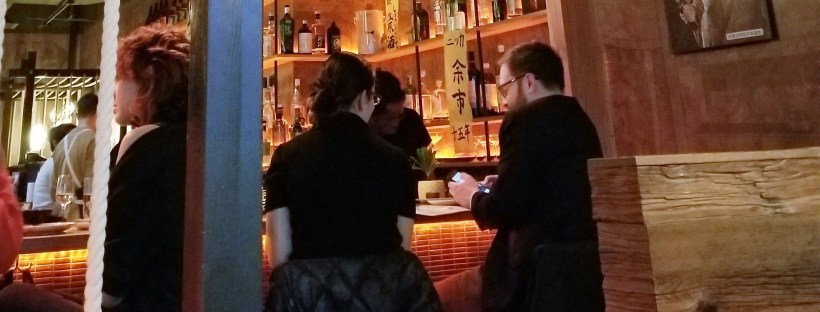
Conversation at a Bar

Semantic Shifts: 5 Communication Changes to Consider

When communicating with others, often times people can interpret what we say differently from how we intended. There are instances when we think we’re being kind and caring, but others interpret what we say as critical or diminutive. Or, in moments when we think we’re coming across as curious, the other person becomes defensive because they think we’re taking a stance in opposition to theirs. Miscommunication happens so often and it’s so important for us to stop and evaluate the changes we can make to the way we communicate so that we’re able to align our intentions with how other people receive our messages.

What we say and how we say things matter. They matter for me in my professional world as a management consultant as I implement change with clients, in my volunteer work as a crisis worker as I listen and support people in tough situations, and most importantly, in caring for the relationships I have with my family and friends.

As with anything worth learning, mastering the art of communication takes time, practice, and experimentation with different approaches. By no means have I reached mastery, but I continue to prioritize this as one of the most important things for me to continuously improve. Based on some of the recent training I’ve received around effective communication and developing listening skills, here are the top five changes I’m making to the way I communicate:

1. APOLOGIZING ONLY WHEN I’VE DONE SOMETHING THAT HAS HARMED SOMEONE ELSE.

Being overly apologetic is something more common in women than men. We all know someone who starts every sentence with “I’m sorry…” Like, “I’m sorry, but I have a question.” or “I’m sorry to impose, but would you mind helping me with this?” I catch myself doing this every now and then. I’ve realized that if you say it too often, it dilutes the meaningfulness of your apologies when they’re actually appropriate.

Instead of saying “Sorry for…” I’m trying to say “Thank you for…” This slight shift makes me appreciate the other person, rather than depreciate myself. It’s important to acknowledge when we should honor someone with a true apology, but in cases when it’s not absolutely necessary, saying “Thank you for…” totally shifts the dynamics. For example, rather than saying “Sorry I can’t make it to your event…” say “Thanks for understanding why I’m not able to make it. I would have loved to attend.”

2. ELICIT QUESTIONS RATHER THAN SOLICITING AGREEMENT.

People often finish explanations with “Does that make sense? Or “Do you understand what I’m saying?” That can often come across less about the message and more about the receiver’s capacity to understand. Questions like these could also give others the sense that you’re trying to get their agreement on what you’ve just proposed, rather than a real question about the clarity of what you’re proposing.

Instead of saying “Do you understand?” or “Does that make sense?” I’m trying to say, “Any questions or anything I can clarify? The latter invites the person you’re speaking with to voice any questions or concerns, whereas the former leads to a yes or no answer with encouragement towards a yes answer in an off-putting way.

3. ASKING OPEN-ENDED QUESTIONS VS. YES/NO QUESTIONS.

Along those lines, especially when I’m trying to understand someone else’s perspective, I try to ask open-ended questions. This is especially helpful when I’m trying to comprehend someone’s situation. When I asked questions that lead to yes or no, it takes more effort for me to pull out the “why” or the “what” of someone’s feelings and thoughts. Also, yes or no questions can be really misleading. Instead of asking, “are you feeling angry right now?” try asking “how are you feeling right now?” to allow them to use their own words to describe what they are going through.

4. AVOID ASKING QUESTIONS THAT COME ACROSS AS JUDGMENTAL (E.G. WHY?)

Proponents of the “five why’s” approach say that asking why then why again, then why again, and so on leads to a deeper understanding of root causes. It’s important to understand why, but sometimes phrasing it that way can come across as judgmental.

Asking “why are you doing it that way?” can be received as you not agreeing with the way someone is approaching things. Try asking, “Can you walk me through your thought process so I can understand your approach?” Asking why can sometimes make people feel like they have to justify their feelings or actions, which can shut them down, preventing them from them helping you to understand them.

5. SOUNDING INAUTHENTIC WHEN USING TRAINED PHRASES.

At some point in our lives, we’ve probably attended a course where we learned how to be a reflective listener. We’ve been advised to repeat what someone else has said by saying “what I hear you saying is…” This can have an adverse effect because people think you’re using a learned phrase rather than actually listening to what they’re saying. Rather than using a phrase that’s commonly used when employing an active listening script, I try not to change the subject or dive right into what I think. As I mentioned earlier, I ask more open-ended questions that encourage the person I’m speaking with to tell me more.

These are the top five semantic changes I’m currently experimenting with when I speak to people with the intention of connecting with them and truly understanding one another. Besides rephrasing how I would usually ask these questions, I’m also working on being conscious of how I’m feeling, especially how those feelings show up in my micro-expressions, and what I’m looking to gain out of a conversation. If I’m coming from a place for curiosity and care, rather than trying to get someone to agree with my ideas or give into something I want, I feel more connected and aligned with the person I’m communicating with, which leads to more meaningful and effective conversations.

What positive changes have you made to the way you communicate?